
For the longest time, I debated hitting “Publish” on this post. Until now, only my closest friends had any idea about how my pregnancy progressed, and it all felt too deeply personal to share. I was only able to tell it by writing in the 2nd person. I am immensely grateful to all the women whose pregnancy stories helped me make sense of what I was going through and gave me hope that it would all be okay. And so I’m telling this story. Because there’s another mom out there frantically Googling, and if I can somehow help, then it would be my greatest privilege.
When you find out you are pregnant, you let yourself feel only the slightest shock and panic. After all, you’re a veteran at this thing, right? Yes, you aren’t in the best of health to begin with. Your iron levels are low and you are borderline underweight from the stress of school. Still, this is your 3rd pregnancy. The first two were relatively smooth, you don’t expect this one to be that much different. And so you power through the morning sickness. fatigue and random aches, wrap up your MBA, accept a job offer, go on holiday and swim in the ocean, move your family back to Lagos and celebrate your birthday.
And then one October afternoon, in the middle of your second trimester, you notice the slightest bleeding when you go to the bathroom. Your OB-GYN arches an eyebrow when you tell her you have just resumed exercising, and she advises you stop while you figure out what’s going on. You comply and the bleeding seems to stop. Yes, there’s the odd smear now and again, especially when you’ve been driving in Lagos traffic but you mostly ignore it. One Sunday morning, however, you wake up to bright-red bleeding. By evening, you can see small clots, dark red and terrifying in their implications. Clots are the last thing you want to see when you’re pregnant, and so you make a beeline for the emergency room.
You spend the night in the hospital as the doctors struggle to identify why your body is acting unusual. The sound of the baby’s heartbeat on the monitor evokes a prayer of gratitude from your lips. But there is also no mistake about it. At 22 weeks pregnant, you are having contractions. No, not harmless Braxton Hicks contractions. Proper contractions. The doctor says it’s probably a threatened abortion. You know, like a miscarriage.
It’s hard to explain the bond that forms between a mother and her unborn child. To the rest of the world, the mother is still one person, right? Yes, with a baby bump. But she’s still one person. But she knows that she is actually two people. She has spoken to her child, prayed for him/her, shared jokes, hummed songs. She has imagined a future with them, and as time goes, she grows more protective.
And so when the doctor casually (but firmly, as if she’s trying to prepare you for the worst) says, “It’s a threatened abortion,” it feels like a punch to the chest. For good measure, you see a different doctor, who identifies a potential placental previa. (And oh, by the way, your baby is transverse i.e. lying on his side, instead of head down). There’s not much that can be done. Here, some Cocadamol for the pain of contractions (pain begets more contractions begets more pain). And here, Nifedipine to stop the contractions but mostly, you need bedrest.
As a true millennial, you lose yourself in Google rabbit holes, piecing together WebMD articles and Babycenter posts till you have some idea of what’s happening. But it’s not enough. There is no respite. Nothing can be done except to stay still. But how? How do you stay still when you have two other children, a never ending to-do list to complete before the baby is born and a fulltime job? One day, you decide to make some moi-moi. The next day, your bleeding resumes. As the baby grows, you feel his weight on your pelvis in a way that compels you to hold your belly in and pull up your pelvic muscles as you walk, lest the baby falls out. (You feel as if he really could). Weeks of bed rest and “taking it easy” stiffen your joints and worsen your pubic pain. You need crutches. That’s how bad the pain is. But you also know that it would alarm your loved ones to see you so debilitated so you put on a brave smile and power through the pain.
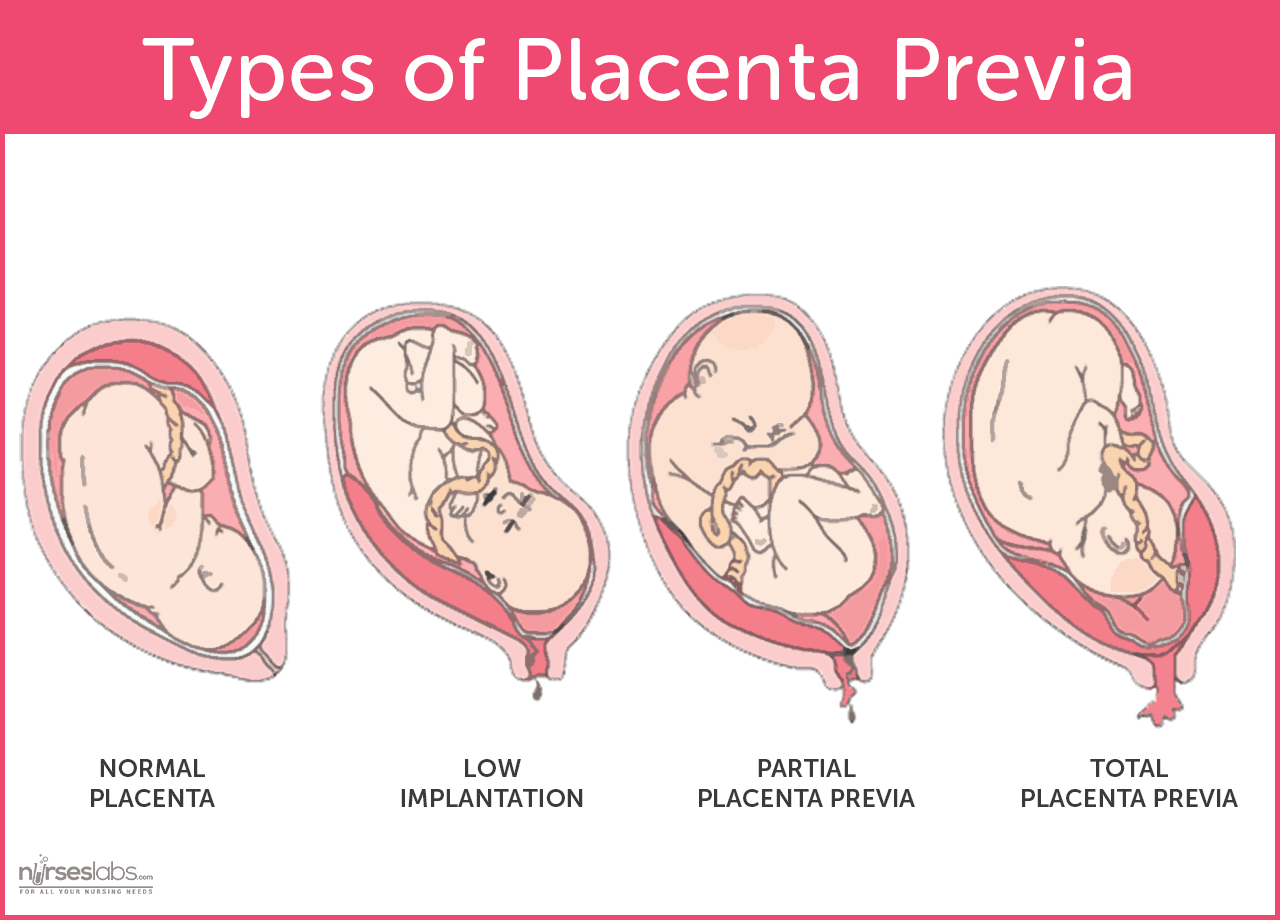
You continue working; thankful that your job is fully virtual. The doctors can’t seem to make up their minds on what is actually causing you to bleed. Some doctors maintain it’s the placenta being so close to the cervix that’s the cause. But the contractions have other doctors convinced that somehow your body is really working to expel your child. It tastes like betrayal and you feel uncertainty and a loss of conviction in yourself. How can my body do this to me?
You learn that the weight of the growing baby is putting pressure on your cervix/placenta; a potential cause for more bleeding. You also learn that as your uterus expands, there is a 95% chance the placenta will grow away from the cervix. You binge on Babycenter threads, sending your husband snippets of remedies. Nifedipine. Lots of water.
You open up to a few friends about what you’re experiencing and that’s when you discover it’s a lot more common than you thought. A close friend has lost her twins because of placenta previa; she haemorrhaged and had to spend excruciating weeks in the hospital. You hear of someone in the US who literally bled out in the car as her frantic husband raced them to the hospital. Someone else had woken up to a wet bed, thought she might have had a bladder accident only to turn on the lights and find her bed as red as a murder scene. You try not to let the fear overwhelm you; instead you pray. God, you gave me this child and have kept him so far. Please see him through. And keep me alive, especially for the sake of my children. Your oldest son pretends but you see the worry in his eyes. Your younger son bursts into random tears when he remembers your hospital stay. You focus on transmitting to them the calm that God has placed in your heart. It will be well, it will all be well.
You do something stupid.
After 3 weeks of taking things easy and noticing no bleeding, you decide to resume some level of activity. The first thing you do? Take a 30-minute walk to stretch your legs. Yes, incredibly stupid. Because that same evening, you start bleeding again.
At this point, you give up all activity. No driving. No cooking. No playing with your sons. No leaving the house. It is a blessing to be working from home and you show up everyday to MS Teams with a bright smile and your usual jokes. You snuggle with your sons on the couch and read stories together. You pray and ask your family members and friends to join in.
There will be more bleeding and hospitalizations as the days wear on. The very last one happens when you are 30 weeks pregnant. It is the worst episode; you feel every single contraction and you bleed so profusely, you fill a pad in an hour. When you get to the hospital, you are wheeled straight to the emergency labour & delivery (L & D) ward. Your doctors are convinced that you are going into premature labour. You are given steroid injections to mature the baby’s lungs and then an IV of magnesium sulphate to stop your contractions. For the first time, you cry. This is so hard and sad. It’s so unfair. The nurses try to console you with thoughts of, “Hey, maybe you’ll meet your baby.” But you don’t want to meet him like this, not 10 weeks early with him probably having to be in NICU for at least a month.
The ultrasound scan shows that your placenta has moved away from your cervix but they can’t determine why you’re bleeding. Thankfully, the contractions subside. The doctor discharges you with strict bedrest instructions. “If you have another bleeding episode, I will have no choice but to mandate you spend the rest of your pregnancy in the hospital. You could lose litres of blood in minutes and it would be fatal for you and your baby; we would need to monitor you round the clock.”
In addition to the Nifedipine, you are told to ensure you never get dehydrated. You drink 4 litres of water a day and only leave your bed to use the bathroom. The contractions slow down, lose their intensity. The bleeding stops. You have such severe pelvic pain that standing upright is a battle. But the baby is fine. He kicks. He rolls. You love him so much and can’t wait to meet him.
Christmas rolls by and you manage to have a great holiday with your family and friends. At one point, there are 6 children and 7 adults under one roof. It is proper chaos but it is exactly what you need to stop worrying.
You make it to 36 weeks without any more bleeding. At this point, if the baby is born, he will most likely be okay. Besides, your other children were born at 37 weeks. Your doctor is delighted and relieves you of bedrest. You start the countdown to labour. You are thankful; God has been kind.
(To be continued)
Thank you to everyone who responded to my call for feedback in my last post! It was very helpful and
“Well, madam. I’m pleased to inform you that you’re pregnant.” I face the do
“How lucky I am to have something that makes saying goodbye so hard.” Winnie The Pooh. T
Comments
-
-
Osemhen
Thank you, Folakemi! I just read your post and all I can say is Wow! Maybe it is a 3rd baby thing? We are both well, thankfully!
-
-
Jessica I.
When I got the mail with this post, I was like ‘Great Osehmen writes again.’ Nothing prepared me for this but I’m so glad that you chose to share. We live life oblivious to the fact that people are going through things yet carry on with an upright gait and a broad smile.
Perks – you know that you haven’t just birthed a fighter but a winner as well.
Thank God you both are doing great. Can’t wait to read the rest of it.
-
Osemhen
Thank you, Jess! I joke that after all the wahala he’s put me through, he’s exhausted his lifetime supply of wahala. He’s only allowed to be a gentle baby/child from now on.
-


Folakemi Emem-Akpan
Hmmmmm. I know you haven’t ended the story just yet, but I do hope you and baby are well? What a story. And what a love we have for our babies, even while we still hold them in our bodies. And lol, what is it with third babies? I had not a so not nice experience with my third as well nearly four years ago, and wrote about it when it was all over, just like this (I hope this is over for you). I had hyperemesis and it was hell. Sharing a link to that story if you have the time. https://folakemi.wordpress.com/2018/11/03/journeying-through-the-valley-my-hyperemesis-story/
Thanks for sharing and sending love and kisses you and your family’s way.