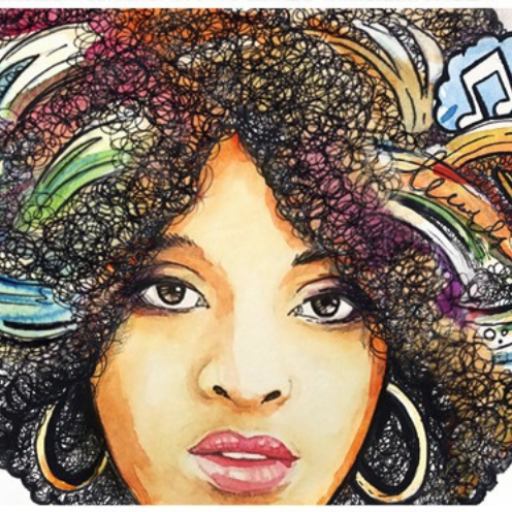
Feminism.
A dirty word in some circles. When I hear the word, I think of fiery black women with dreadlocks or white women in badly fitting suits. Don’t ask me where these images come from; I don’t know. I do want to know: what’s all the fuss about?
I am a Nigerian woman. I am educated. I hold a job that pays me the same as my male colleagues. I voted in the last election. I can drive. I can own property… Now that I think about it, what exactly does being female forbid me from?
I can’t be out by myself late at night. Common sense. I could be robbed and/or raped. But that isn’t feminism’s war. That’s a function of security. A guy would be vulnerable too. Well, being female puts you at a disadvantage in the corporate world, some say. You can’t be a top-level executive. And they have stats to prove it. I’ll get back to that in a bit.
There are societal norms about how I should interact in society as a woman. But I think that those norms are shaped by the family I grew up in. I was told I was intelligent. Not relative to a boy. Intelligent in my right. The world was my oyster, the sky my limit, my life was charmed. My future was placed before me in pragmatic terms. I could be a career woman like my mother, keep a store close to home like both my grandmothers or be a housewife like many of my cousins. Each was a valid option and growing up, I was exposed to the pros and cons of each.
And this is the thing. A woman should have choices. We may not always agree with those choices (to stay with an abusive husband, to never marry, to take up a job, to become a housewife, to drop out of school) but they’re hers.
I was taught to respect men, to honour the man I would eventually marry. I like to think that my future husband was taught to respect women, like my brother was taught, like my sons will be. But I was also taught to pay for my drink. To be content with what I had. To earn my money without selling my dignity.
Society didn’t teach me this. Family did.
Yesterday, I took a male friend out to dinner. I called the waitress over. I requested the menu. I ordered. And when we were done, I requested the bill. When she got to our table, the waitress made to give it to him. I stretched out my hand to take it. She ignored me, and still pushed it to him. He smiled and handed it to me. The look on her face as I counted out the money from my wallet was priceless. Was I offended? No. Amused, more like. And frankly, I considered it too small to hold a grudge. I don’t blame society, I understand that it’s a function of her family and upbringing.
And then, there are bars/restaurants/clubs who refuse entry to unaccompanied women. On one hand, I find it amusing that a public establishment would seek to make moral choices for its patrons. On the other hand, I would boycott such an establishment. If you don’t want my custom, why would I force it on you? My own money? But I also think that this is a petty battle, and one I wouldn’t waste effort on.
What battles would I be interested in? Poverty alleviation. I hear of families that send only their sons to school because they think their daughters could do no better than to marry well. But often, these families can’t afford to send everyone and so they have to make a choice the best they know how. But what if they could afford to send them both? Would they still refuse? I could be wrong, but I don’t think so. And so our battle should be getting them across the poverty line. I know a mother who runs a small kiosk to support her family. Getting a bank loan to expand her business would be difficult. But that’s not because she’s female. Her husband is a vulcanizer (Nigerian term for a person who fixes tyres), and I daresay getting a loan would be difficult for him as well. It’s not really a gender problem, but one of class distinction.
Gender equality battles aren’t complete if we don’t fight for men’s rights, as well. Does this sound odd?
Back to the corporate arena. I overheard female colleagues complain that we aren’t well represented in our company’s leadership. They insist that D & I should be brought to bear. I differ. Leadership should be given to the most capable, not shared between the genders. If I want to be manager (as a male or a female), I have to work harder and longer than my peers to develop the right competencies faster. That’s easier when I’m unencumbered by family commitments. However, if after getting those competencies, I was turned down and the job given to a less competent male, then I would cry foul.
If I have a family, it gets harder. Some jobs are inherently incompatible with raising a family. With a family, I simply will not have enough time to develop those competencies faster than my peers. As a parent, I have a responsibility to raise my child. I can’t balance this with working long hours unless I have a very supportive husband. Let’s say he supports me 100% and he’s willing to take responsibility for our child. If he’s a house-husband, this is easy. But house-husbands aren’t common. Men have not been wired by their families to be house-husbands. So he has a job. Will his job let him close at 3.30 to pick our child from school? Will his job allow him take the afternoon off to take our child to hospital? Or his school’s soccer game? No. Women get those breaks in some companies, men hardly ever. And so this is what I think should be feminism’s cause. Flexible working hours for both sexes, so that each spouse can choose to support the other. Not just women, but men too. My husband should get paternity leave as long as mine so that if I choose to return to work a week postpartum, he can stay home to care for our infant. Amen?
There is the aside that even with these perks, some men would not support their wives’ ambitions. A shame, but that’s all it is. Society (or a movement) cannot force a man to support his wife, it’s a personal choice. The same way it’s a wife’s personal choice to support her husband.
But don’t hand me a promotion because it’s the politically correct thing to do. It’s an insult to my intelligence, and tells me I wouldn’t have been good enough otherwise.
I fear I may have gone off on a tangent. So back to my original question? What’s all the fuss about feminism? Honestly, I’m interested in hearing a feminist’s or anti-feminist’s thoughts.
I can see how this exercise could be a first step to falling in love. It's definitely a 2nd or 3rd d
The short answer: because this is a democracy. The long answer: because this is a democracy
Comments
-
-
-
ranchosblog
Pseudo-rant/my sentiments exactly. It rankles to see women get favours simply because they are women (and in the male-dominated world of engineering, this happens a lot). When I complain, I’m told I’m not being gentlemanly, so it’s nice to hear this from a woman.
Without prejudice to the rest of what you said, this struck me the most. It’s an over-compensation, and it’s as equally unjust as the discriminations. I’m all for women empowerment and feminism, but I’m more interested in equal rights, fairness and balance for everybody. I’m more on the side of merit than anything else.
#dasall
-
Osemhen
Thanks for reading, Tolu. I can understand your ire. Most affirmative action is at best, a bandage. Instead of lowering standards for women, why not empower/educate them to meet the same standards men face?
-
-
Muyiwa Talabi
Very good read for me. When it comes to these issues of gender equality I think its a noble cause and I support it 100%. However, there are things I do not support.
1. The word “Feminist”. To me it tends towards extremism, and I resist any form of extremism, there are always better ways to handle things. These things also make talking and acting on gender equality issues more sensitive and difficult. In my opinion.
2. Many ‘feminists” do what they do, without any real objectives in view. Its not about hating men and trying to bring them down to elevate themselves, its about getting humanity to a point where you don’t make decisions about people based on their gender. Once again, in my opinion.
3. A lot of us fighting for gender equality are sometimes not practical with the outcomes we want. Myself included.That being said, I know a number of people fighting (sometimes) successfully on this issue of gender equality. I just refuse to call them feminists. I wish they would agree with me, but they don’t.
I know many men (and women) don’t help matters with the way they act. I am embarrassed a lot of times when I see or hear some comments from my fellow men. Gender equality is very possible, many people are reaching those areas and I believe we would get there one day.
Some sentences and paragraphs here were just perfect for me and I hope many people would come here and read them.
“Gender equality battles aren’t complete if we don’t fight for men’s rights, as well.”
“But don’t hand me a promotion because it’s the politically correct thing to do. It’s an insult to my intelligence, and tells me I wouldn’t have been good enough otherwise.”Thank you for this. Thank you for giving room to talk about this sensitive issue practically, I am guilty of shying away from giving my real opinions because of the inherent sensitivity involved.
-
Osemhen
Thanks for commenting, Talabi. It is a sensitive issue. But one I think we need to discuss reasonably. Our children’s world depends on our decisions today.
-
-
FD
Nice one as usual, Osemhen…
Your note affirms the fundamental truth that underlies ANY problem: “heal the MIND, heal his society…”
“Society” as implied means both within him and outside of him…
Will share…-
FD
Nice one as usual, Osemhen…
Your note affirms the fundamental truth that underlies ANY problem: “heal the MIND, heal the society…”
“Society” as used here that within the man (his own worldview) and that outside of him (his home, nation, etc)…
Will share… -
-
-
highlandblue
I am still waiting for the females to comment.
The subjective part of promotions is still a big factor. Men are just seen as more capable of separating emotions from business decisions.Whether that’s an advantage or not is yet to be seen.The women who are ruthless like men are called different names and treated like Thatcher.Almost impossible to win. I admire successful women-
Osemhen
I imagine that ruthlessness is key to being successful as a business leader. Mrs. Thatcher is a good example and an inspiration, actually 🙂 I imagine that her reputation was the last thing she worried about.
-
-
CHIOMA
I really don’t want to comment, but i must.
Osemhen, this is such a well-written post. And I agree with you on most of the points you raised here.
First, feminism isn’t a bad word. We’re all just afraid of it because it is some form of revolution against oppression. Can we deny all the injustice women have had to deal with? Don’t even get me started on all the chauvinism I endured while growing up. It was the only way my folks had learned to raise women – with iron hands.
Now, I happen to be the only female staff in the IT User Support department. I work as hard as the men and I have gotten relevant certifications (the right way to improve yourself). Yet, i am never invited to interviews whenever I apply. Sometimes, the HODs assume that i will not be interested in a promotion because my husband’s location will determine mine. I am not even given an opportunity to prove myself or advance in my career path. Now, where’s the justice? Whenever customers enter my office with a bad computer or modem, they walk straight to the men and ignore me. They’ll give me their computers to fix mostly when the guys urge them to. And you can see the shock on their faces after the problem has been resolved. Some go on to say that it’s a man’s job and they couldn’t believe a woman was doing it. It’s the society we live in and people act out their thoughts and beliefs. You think women won’t feel out of place for being treated like second-class citizens?
Let me close with an experience with the Police Service Commission. Did you know that women were dropped from the interview process (for positions in the new ICT department) just because they were married? But their male counterparts were not affected by their marital statuses? Now tell me what a woman’s marital status has to do with her job as a Network Engineer? When I complained, everyone just said the women ought to have lied about their statuses. Married women are never given employment into any of Nigeria’s military or paramilitary institutions, shikena! Can you imagine that? Yet women are promised equal opportunities.
Enough said already. But it isn’t easy for some women to be quiet about these social injustices. I am against extremist feminist tenets but everyone has a right to their own opinions. They can stretch and distort the term, the way people stretch and distort other terms, such as religion etc.
Don’t forget: abuse doesn’t negate use.
-
Osemhen
Thank you for overcoming your reluctance to reply, Chioma.
Yes, we discussed the Police Service recruitment. I actually think such discrimination is illegal. And worthy of a lawsuit!
I imagine your clients’ reaction is similar to mine when I meet a male nurse. In a roomful of nurses, I wouldn’t gravitate to the male nurse. Lol. I guess I’m part of the problem. A solution would be for male nurses to be so ubiquitous, I wouldn’t blink at the sight of one. Ditto network engineers 🙂
The other nuances aren’t so easily resolved and certainly are worth fighting by… feminists. 🙂 I don’t have a problem with the word, just some of its ideologies.
-
-
CHIOMA
Again, let’s face it: it’s a man’s world… but James Brown put a twist to it, “…it ain’t nothing without a woman.”
-
damisola
It’s a pity you see feminism as a dirty word. But that is understandable. It’s the kinda schtick islam or trado-worship or christianity gets in some circles. A sort of idea without knowing the content. I know what I’m about to write will not for all intents and purposes be enough but I hope it will give you a glimpse.
1.Feminism arose because of the oppression women ALL over the world faced and are still facing. Classic case is Malala being shot because she wants to go to school & it’s not just a muslim thing. Jewish men have a prayer thanking God that they were not born women while Christian theologists have argued that women are somewhere between child and animal.
2. Many of these oppressions include the rights to vote, participate in politics (I.e run for office), work (anywhere they choose too), make money (the term is called equal pay for equal work), to education, sexual liberty including access to contraceptives & abortions. It also supports protecting women from cultural harmful practices which many tribes have had, the ability to own property, the freedom from sexual harrassment, rape, abuse etc
3. Feminism is about both sexes. Due to the agitations of feminists worldwide, men have been given a voice. You ask how has feminism helped men? Think about this, men now have paternity leave (in most companies sha not all), this is because women say that men deserve the chance to be parents as well. Not just fathers. Men can do anything they choose, without their manliness being called into question. For boys who are abused and men who are raped, there is no more a flippant reaction telling them to take it like a man or a derisive look questioning their manliness, it is admitted that men do get raped and it is just as humiliating, stripping and painful.
4. Jobs and promotions: I know we (humans) have a tendency to overcompensate for prior errors on our parts. In Nigeria, we have the Federal character (which is appointing based on geopolitical zones), we also have educationally disadvantaged states (thus giving university admissions to less deserving students because they come from some parts in the north). In south africa, there is Black Economic Empowerment which provides that blacks must fill certain quotas in organisations before whites can be employed. This sort of affirmative action is done in a bid to “help” close the divide created by perceived and actual wrongs. At entry level, it’s easy to assume you don’t face any discrimination until you get to managerial stage and then all your sins start to come up. The worst being a woman, even worse if you happen to be married. There are many law firms with 20 female Senior Associates and 10 male partners with the token female partner and you wonder why don’t these women get promoted. We have about 13 banks or so banks with 2 female MDs in all. Are we to assume, women are not as smart to make MD or partner?
I’m about to wind up my epistle, I recommend 1. Sheryl Sandberg’s book Lean In, it is brilliant and full of insight when discussing women in the work place. 2. Listen to chimamanda adichie’s TED talk titled Why We Should All Be Feminists. 3. Wikipedia has a nice page dedicated to feminism and the different types. 4 Read up on elizabeth cady staton, sojourner truth, funmilayo ransome-kuti, hillary rodham-clinton, beyonce, sheryl sandberg (who also has a ted talk). All brilliant feminists.
I forgot to note, Feminism is a very african thing. From moremi to mrs ransome kuti to the aba women’s riot. These are women that refused to submit to male oppression. All you are and can be today is through feminism, it will be very unfair to our daughters if we (men and women) stop the good fight and ignore many cases of oppression in nigeria and around the world. I mean, last year was the first time in the history of the olympics tha women from ALL over the world could participate. Isn’t that just amazing. We still have child marriage, women are burnt so that their property can be claimed, there’s FGM etc.
And I leave with this quote by someone called Michael Kimme. This is especially for the guys that commented: “… Women make gender visible but most men do not know that they are gendered beings. Courses on gender are still mostly populated by women. Most men don’t see that gender is as central to their lives as it is to women’s. The privilege of privilege is that its terms are rendered invisible. It’s a luxury not to think about race, class or gender. Only those marginalized by some category understand how powerful that category is when deployed against them”
I proudly call myself a feminist. It is a beautiful word. I hope you do learn to be proud to be able to do so too but if you never do please don’t attempt to insult or dismiss what feminists and feminism have/has done, are/is doing and will continue to do.-
Osemhen
Thank you, Damisola for your comment. I found it very helpful.
I don’t think feminism is a bad word, but I know people who think it is.
Your points are valid, I imagine they are born out of your experience and knowledge. I personally know that Nigerian inheritance laws favour male children over female children.
Again, thank you.
-
-
kaudresi
I dont agree with most of the views stated. For many
reasons.
Society is made up of families.
If you happen to live in a place where the thinking is that men and
women are not equal, the chances are great that you will be brought up
by a family that holds the same views.
Blaming inequality on poverty? I dont think so.
Maybe ignorance but not poverty.
I work in a rural community and this has given me a chance to interact
with the women and men in this society.
A man will choose to send a male instead of female to school, not because he cant afford to send all of his children to school but because a woman is for marriage and bringing wealth in terms of bride price and a woman will go to her husbands family.
She will not stay at her fathers place.So , I ask, where is the equality there in?
Same number of days for maternity and paternity leave?
Really? Are we talking justice here or equality?
The reasons for women receiving a longer maternity leave are more than just time to look after a baby. After 9 months of carrying a baby, your body which has been going through many changes needs to try to get back to a normal state. The postpartum period is usually 6 weeks and during this time ur body is going through many physiological changes to get back to normal. And what the piece is forgetting is that men dont breast feed.
So, yes men should get a partenity leave but I dont see why it should be
the same length as maternity leave.There is a difference between justice and equilty. There is a caption on
Facebook that I like. It schematically tries to differentiate justice and
equality. With justice, 3 people of different heights are given stools of
the same length to try and view a game in a stadium. Obviously, the
taller person is still at an advantage and the shortest is still unable to
see the game.
But with equality, the shorter person is given a longer stool than the tall person. So, in the end, all 3 people are at the same height and can all watch the game.
Now thats equality.
Back to the topic, men and women are different. Physiologically,
physically, even mentally they say. The hormones coursing through your
a mans veins are much different than mine.
And hormones influence behaviour.
So, for one to say, that we should all be given the same height of stool in the world is not equality but justice.
Equality takes into account many of the differences that make one male or female.Equality takes into account the fact that a woman has a menstrual cycle but a man doesnt, a woman has a biological clock and menopause but a man doesnt, a woman has estrogen and progestrone and thus mood swings but a man has a small quantity of these and may not as likely get these.
That some diseases affect either males only or females only.
That men have higher levels of testosterone that naturally make them
more muscular and stronger etc.
If we are to talk equality, lets not forget the differences.
And naturally women have a stronger maternal instinct than men and look after offspring better.-
damisola
I only agree with your first paragraph. Now on to the rest.
1. You talk about the lengths for maternity and paternity leave and tie it into the fact that women are better caregivers. Apart from being fallacious, that is quite unfair. There are many women who are unable to breastfeed. Through no fault of theirs. There are just as many who choose not to breastfeed. Does their inability or unwillingness to breastfeed make them lesser mothers? No, it doesn’t. Therefore, men can offer just as much care and love as women to their kids because the kids belong to them just as well. What happens if a man’s wife dies at childbirth? We always absolve men of this responsibility. Also, paternity leave is not a holiday. It is a period where a man supports his wife and his kid. The feeding, changing, bathing. It could be at the same time or after her own leave is over. Paternity leave is NOT a holiday and men are just as able as women to take care of their kids. Let’s stop making excuses for them
2. Justice and equality: if we think in terms of money as opposed to stools will you feel the same way? If you worked as hard as someone else but paid less because that person has 5 children as opposed to your 2, is that good enough for you? I leave you to ponder that.
3. The argument that men and women are psychologically different has been used to hold women down for centuries. Millenia even. It is a term of oppression. It has been argued that women are unable to think like men which is why they shouldn’t go to school or that women are too sensitive and cannot make pilots. In islam, women are not as mindful as men which is why you need 4 female witnesses for ever 2 males. This is very sad. Physically different, surely. How else would we be able to distinguish? But you make no room for transvestites which are actual people caught in between. Anybody can have mood swings. Oestrogen doesn’t have to do with that. Frequent mood swings in either sex needs to be checked by a psychologist. Men undergo changes just as women do, that shouldn’t determine their ability or inability.
Women do not look after offspring better. There are many women who are shit parents and men who are great parents. We should determine parenthood by the care of both parties and not their sexes.-
kaudresi
Damisola, actually research does show that Estrogen affects moods and since women have more of the hormone, they tend to have more cyclic mood swings.
You can check out the articles below and am sure if u research some more, you will have many of its kind.
http://www.m.webmd.com/women/guide/estrogen-and-womens-emotionsOn the issue of substituting money for stools in my illustration of differences between justice and equality, am glad you brought it up. Where I work there are a number of allowances paid ontop of the basic salary. One of them is a family allowance and another a health needs allowance.
The more children you have, the higher your family allowance and even your health needs allowance. Among my 4 collegues, I get the lowest of these allowances because I dont have children and they have big families. Do I complain, no I dont. Because thats equality to me.
They have more needs, I have less. Why should I get more?
My analogy shouldnt only extend to money or stools. It should extend to opportunity and other things.About men being just as good as women at looking after children I disagree.
We should look at majorities and the statistics there in. God in his infinite wisdom created women to produce breastmilk because its internationally known that breatmilk is the best food for a growing baby before they are weaned off at 6months. And exclusive breastfeeding is often encouraged even in HIV positive women.
So, some few women choose not to breastfeed for various reasons but not the majority.
And making maternity and paternity leave the same length is justice, not equality. But thats my opinion.Lastly, you can choose to argue otherwise but research does show that women and men are different. Its not a question of something told to oppress women. Its a fact. And we women should not be ashamed of these differences. We should use those differences to our advantage.
You can read the articles below on the subject.http://www.2knowmyself.com/psychological_differences_between_men_and_women
http://en.m.wikipedia.org/wiki/Sex_differences_in_human_psychology
-
-
-
FC
Commenting on issues like these for a male sometimes requires a skill in diplomacy as opposed to outright bluntness but, I will risk sayin the wrong thing here. I have wondered abt the concept of feminism and while it is true that the greatest injustice is visited on the ‘weaker’ of the 2 sexes, it must bear noting that evil is always visited by the stronger on the weaker, sometimes irrespective of the sex. A case in point is plainly seen in history both of Nigeria and the west. Mrs Ransome-kuti’s activities were not simply feminist and thats why her sons towed the path of activism. She was I beliv, fighting for Nigerians and not just women. The reality is that in nature, if a man is taught to respect a woman, he always will and if a woman is taught to undervalue women, she too will. The problem is that more often than not, both males and females are taught to undervalue the femalle knowinly or unknowingly. I may be wrong but I do recall that some of the agitators/perpetrators of female genital mutilation were women. I was taught by my mother that you must treat a woman decently and I suppose that with all my failings I do find it extremely difficult to raise my voice at my wife when I’m angry- trust me I’m not a saint! True, I hate being beaten by a female in anything but sincerely I hate being beaten by anybody at all. I do think however that for a woman to claim that bcos she is a female I shd let her off is completely riling! Healthy competition never killed anyone. I suppose that all I’m trying to say is that the male is equal to the feamale in every respect and as such must be seen as equals. I suppose that nature has a way of having the last laugh in these issues and that is why I cannot explain why the male is physically stronger than the female but believe me that a man who underestimates a woman does so at his own peril. The bible alone abounds with such stories.
So, in conclusion the feminist (without being condescending) will never cease to have a fight on her hands but I do believe that until we see, believe and fight for equality of the sexes in all spheres- maternity and paternity leave inclusive- the feminist and feminism will continue to abound.P.S. Osemhen, I do hope I’ve made some sense
-
NONYE
Is it possible that feminism is another catharsis designed to help some women deal with their frustrations and failures in life?
Like you said, a woman should have choices. I believe that nothing can stand in the way of a woman who is determined to succeed. Not even a million soldiers.
The truth is, men and women are different; physiologically and psychologically. Which implies that women and men tend to do better in particular professions.
People make the mistake of thinking that women are the weaker sex. They may be the weaker sex physically; they are by no means an inferior sex. No way. Women are stronger than men psychologically. History is replete with stories of women who controlled kings, generals, presidents, and by extension kingdoms, colonies and nations not by their brawns but by their brains.
An influential woman once asked the same question on BBC: what’s all the fuss about feminism? She went on to explain how disastrous it would be for us all if women rubbed shoulders with men. The only way for women to empower themselves was to use their greatest weapon, ‘their femininity’.
Truth be told, most men I know will kill in order to protect a ‘feminine woman’ who is completely devoted to him. If only women knew the powers they possessed in their femininity, they would stop the entire clamour for sexual equality.
I am for feminism in as much as it advocates for equal opportunities for men and women to achieve their full potentials. But that’s where my support ends.
Neither men nor women are superior. None is inferior; both are only different-
Muyo-san
I couldn’t have said it better than you Nonye. If only women knew how powerful they were by being “submissive” to the men in their lives
-
-
-
MPDchic
Thank you very much! When d govt was saying 35% of ministerial appointments must go to women I found it insulting n ppl were looking at me like I’m mad. If only 20% of women can do d job give it to dem and if 75% of dem make d cut den dey suld get it! Dats when ul be able to say equal rights.
-
CassBaba noni
Wow! I should hunt you down and marry you 😐
This is damn good. Eyeball licking good. -
cknaija
Reblogged this on cknaija's Blog and commented:
Fantastic piece, I do see myself as a male feminist(although not the extreme type, because women and men are different but equal) I do not however think African women, especially Nigerian women, to be feminists, Nigerians are too traditional and religious to be truly feminist, and many Africa women enjoy certain privileges and won’t want to throw that away, for certain other privileges , the only way they can be feminists is to fight for men’s rights as well, will talk more about this too 🙂 -
ayo
Please I want to know who wrote this piece. It’s like (s)he has articulated my thoughts better than I would have. Does (s)he have a twitter handle?
-
Khaddafina
Feminism is very basic; and though it exists within a variety of permutations the essence of it goes something like this: that all men and women are created equal. I am sure that some feminists are militant, but that’s irrelevant. Militancy is not a belief, it’s a degree.
The deal with feminism is that it is a direct, political response to the historical hegemony and privilege that men have enjoyed over women.
So Feminism proposes, for example, that where a man may divorce for adultery alone but a woman must prove both adultery and cruelty: that is inequality; where a man and a woman perform the same job but a man may enjoy the larger portion of pay then that is inequality. Etc.
And when a feminist complains about being looked upon with incredulity when they pay the bill at a restaurant then she (or he) is not merely creating a storm in a teacup; because she (or he) perceives the very act as a microcosm of the larger, insidious idea that a woman depends on a man and that it is not for her to navigate her individual agency. That the waitress found it peculiar that you would pay was not merely an individual/familial parochialism, but a societal one; because such behaviour is not peculiar, such behaviour abounds.
Also aside from paternity leave (of which I am a strong proponent) I am utterly perplexed as to what some commentators mean by “men’s rights”? And actually even in the case of paternaity leave– this has only recently become an issue because its more common now that women work.
Anyhow there are many types of feminism, all sorts of sub-groups, but feminism at its most fundamental is as stated above: that men and women are equal and whatever tries to subvert this must itself be subverted.
-
-
Muyo-san
‘Humanism over Feminism’ is what I like to say. I believe the word “Feminist” in itself defeats its perceived purpose of gender “equality”. I think Feminism’s battle has already been won in the past: women can now vote, drive cars, go to school, hold public offices etc. What we need to concentrate on now is Humanism, not Feminism. Modern “Feminism” to me is just a joke. Especially in developed nations in Europe and America, where some women are beginning to raise the bar for gender “equality” pretty high up (take the case of feminists in Sweden for example).
I also believe that this idea of gender “equality” is a little far-fetched. Male and Female were never created equal. I’m not saying one gender is more equal than the other; they are just not equal, that’s all. It is sensible that we expect men and women to have similar rights for issues like voting, education, healthcare, employment and the like, but there are some areas that should just be left the way they are because they follow the natural flow of the universe. It is a known fact, for example, that men are physically much more stronger than women. I don’t have the stats, but I believe women on the other hand emotionally and mentally stronger. So when feminists in the US start to promote the inclusion of more women, for combat jobs, in the US Army, I can’t help but think that they must have too much time on their hands. -
lagostales
The dinner example happened to me too. My female boss who took me out that day was very angry and insulted the waiter. I was amused.
I was also amused when my expatriate boss instructed a female colleague to stay off the field 2 weeks to her wedding because “her husband would not be attracted to her if she stinks of lube oil.”
I should have been irritated in both cases, but I was amused.
Sadly, education and enlightenment have not made too much of an impact on our remarkably strong *male* culture. Concepts like ‘Paternity Leave’ will be laughed off in many companies. I imagine the man that requests for it will be the butt of office jokes.
I believe that with the mix of Osemhen’s ‘family norms’, Muyiwa’s ‘practical outcomes’ and Kaudresi’s ‘gender equality’, we can build a working model for the future.
-
Awele
This is a very significant post, I love the part where you say;
“But don’t hand me a promotion because it’s the politically correct thing to do. It’s an insult to my intelligence, and tells me I wouldn’t have been good enough otherwise.”
I have read the bulk of the comments on this post and I share some of the opinions expressed therein. I agree that the problem is with everyone of us, we have to change our minds before we can change the society as a whole. I do not consider myself a feminist, but i have experienced some of the chauvinistic ideals of male employers.
Once, I applied for a job in a law firm, and was outrightly rejected without any consideration of my qualifications, because the Firm “didn’t want to deal with issues associated with female lawyers”.
I remember interviewing for my current job and having to react to questions such as; How old are you, and what will happen to your job when you eventually get married and start having kids?!
There’s also the belief that, the career of a working woman dwindles, or ends abruptly as soon as she becomes a wife and a mother. Granted this used to be the case, but with the economy as it is, and the high standard of living, most women insist on pursuing their careers in a bid to assist their husbands in providing for their family.It is such a shame that despite all the awareness, women are still not taken as seriously as their male counterparts. There’s still the notion that certain sectors are reserved for men and women alike. Women cant engage in tedious jobs, work long hours, meet deadlines and the like! however, they are pushed to the forefront of marketing, wooing clients, beautifying meetings and conferences!
I am not asking that women be given special treatment , just equal opportunities as men. Let there be a levelled playing field for both sexes!!
-
-
mimisule
Y is for yay feminism. The problem is that people misunderstand feminism. I wish i had the time to actually comment on this post. Maybe not right now, I’d write something on my blog.


0latoxic
Yes. Yes. Yes.